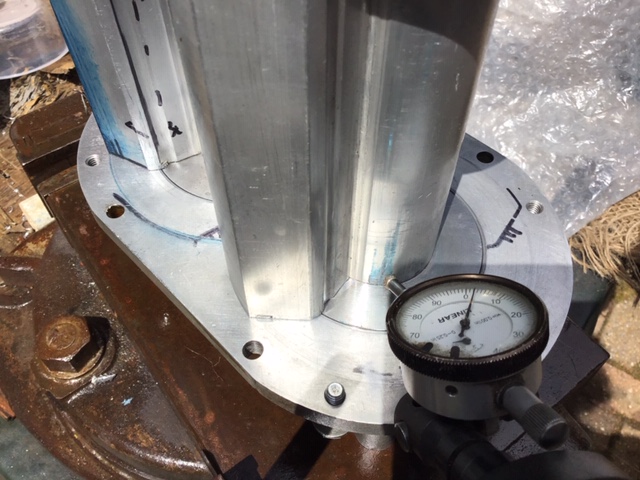
Lots of Supercharger work in the second half of this year...


Earlier this year and a little through last year, you will see posts of the previous supercharger modifications to adapt to the Wolseley Hornet. However, we had a puzzling problem with clearances in use. It finally became clear that despite lathe runs to test the balance the actual engine run up sessions finally indicated that something had broken up inside one of the rotors causing internal bruising which gave spot clearance issues (see bottom photo of this post). Now we have made parts to adapt another type of supercharger to accept the long nose section, we have to keep every dimension under tight control as we do not want to alter the tightly fitting bonnet. Of course as soon as you alter one thing then a whole load of other parts require attention further down the line!

Click on an individual photo to see a larger format!


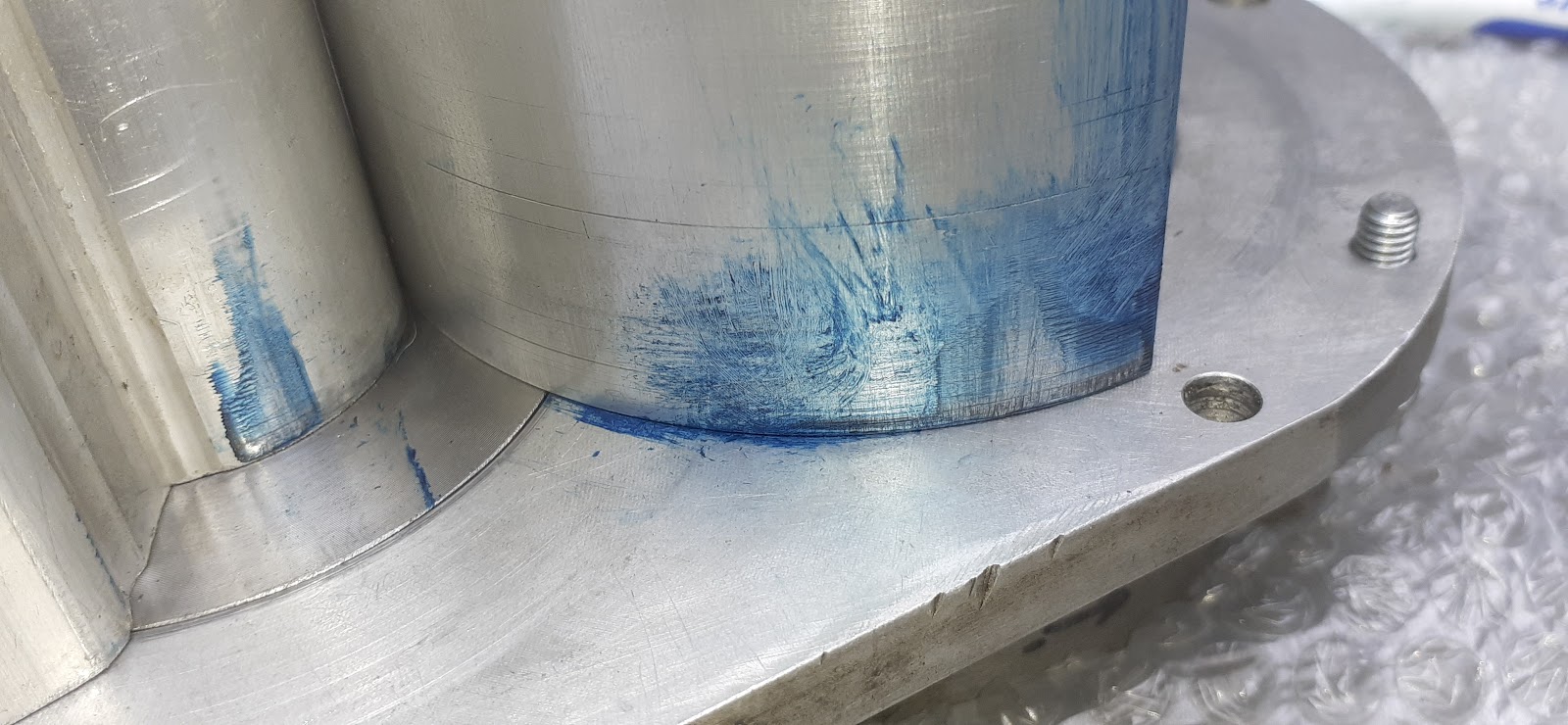


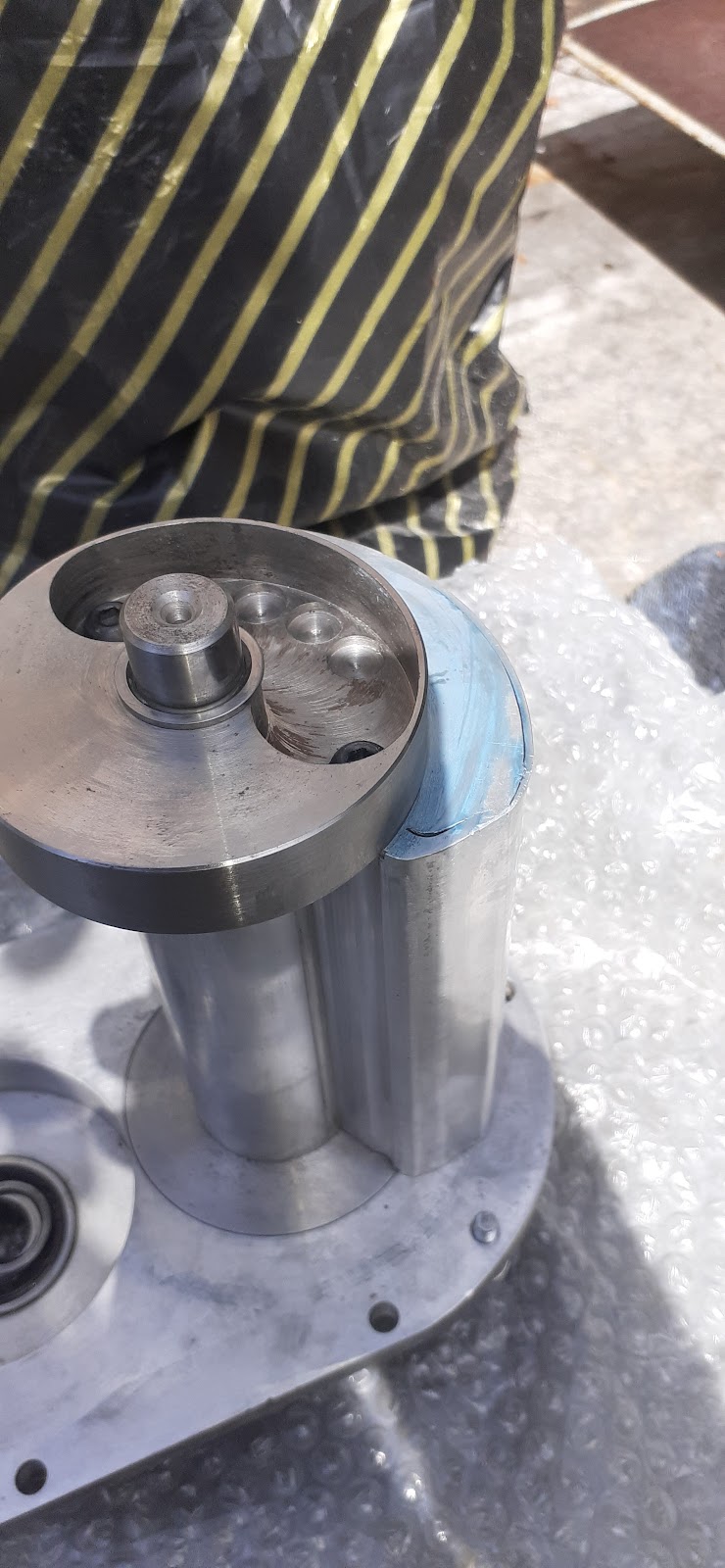
 

Supercharger, some fine dressing.


I had previously recovered this supercharger from the results of a bearing collapse at some time before the owner obtained it.

After the recovery, as a precaution, I made a note of the amount of spring balance pressure it took to rotate the drive (a very negligible low fingertip torque), this gave us a baseline to be able to monitor the supercharger at regular intervals especially following the heat cycles and expansion that it would endure during use. By simply removing the belts and placing the spanner and spring balance in position, We can measure the torque required to maintain the rotation and feel any discrepancies.

I am glad that we incorporated this simple test because here you can see the results highlighted by that  test a few months later... not catastrophic at all but you can see the burnishing that was beginning to occur. Catching it at this stage requires some time consuming dressing mostly using bearing scrapers, but nothing more serious, the amounts are very small but the dressing time is quite intense with many, many trial fits.

Luckily for us we can remove the rotors in situ without disturbing anything more than a throttle bracket.

Incidentally, you will see a great illustration of the balance of the rotors at a nominal 3000 rpm by looking at the surface of my coffee in the short video.


A Few Small Wolesley Hornet Spl Jobs.

  Previously we made a wind deflector for the driver's Brookland screen, as with all things on this car, we tried to make it appropriate...